Quick answer: The habits with the strongest research behind them for maintaining healthy blood pressure are a DASH-style eating pattern, less sodium and more potassium, regular movement, a healthy weight, moderate alcohol, and stress management. Cocoa flavanols can be part of a heart-healthy routine by supporting healthy blood vessel function, but they're a complement to these habits, not a substitute for them or for medical care.
Important: This article is general wellness education for adults whose blood pressure is in the healthy range. If you've been diagnosed with high blood pressure or take medication, follow your doctor's plan and talk to them before changing your diet, exercise or supplements. Never stop or change medication on your own.
Know your numbers
Blood pressure is written as two numbers. The top number (systolic) is the pressure in your arteries when your heart beats. The bottom number (diastolic) is the pressure between beats. U.S. guidelines consider below 120/80 mmHg normal. Readings above that are worth discussing with your doctor. Checking at home with a validated monitor, at the same time of day, gives you a clearer picture than a single reading at the doctor's office.
1. Follow a DASH-style eating pattern
DASH (Dietary Approaches to Stop Hypertension) is one of the most studied eating patterns for heart health. It emphasizes vegetables, fruits, whole grains, beans, nuts, fish, poultry and low-fat dairy, and limits sodium, red meat, sweets and sugary drinks. In the original DASH trial, the eating pattern produced meaningful improvements in blood pressure compared with a typical American diet [2].
- Vegetables and fruits: about 4–5 servings of each per day
- Whole grains: about 6–8 servings per day
- Beans, nuts and seeds: several servings per week
2. Cut sodium and eat more potassium
Most Americans eat about 3,400 mg of sodium a day, well above the recommended limit of 2,300 mg [3]. Most of it comes from packaged and restaurant foods, not the salt shaker: bread, pizza, deli meats, canned soups and savory snacks.
Potassium works the other way, helping the body handle sodium and supporting relaxed blood vessels. Adequate intake is about 3,400 mg a day for men and 2,600 mg for women, and most people fall short. Good sources: bananas, potatoes and sweet potatoes, spinach, beans, avocado, yogurt and salmon. (If you have kidney problems or take certain medications, ask your doctor before increasing potassium.)
3. Maintain a healthy weight
Research consistently links weight and blood pressure. A meta-analysis of randomized trials found that blood pressure dropped roughly 1 mmHg for every kilogram of weight lost [4]. Slow, sustainable changes (whole foods, fewer sugary drinks, consistent meals) tend to last longer than crash diets.
4. Move most days
Regular aerobic activity helps blood vessels stay flexible and supports the body's own nitric oxide production. Guidelines recommend at least 150 minutes a week of moderate activity (brisk walking, cycling, swimming), plus strength training two or three days a week [5]. If you're new to exercise, start small. A 10-minute walk after meals counts.
5. Keep alcohol moderate and watch caffeine
Heavy drinking is linked to higher blood pressure over time. If you drink, keep it moderate: up to 2 drinks a day for men and 1 for women, or less. Caffeine can cause short-term rises in blood pressure, especially if you don't drink it often, so pay attention to how much you're having, particularly in the afternoon.
6. Manage stress and protect your sleep
Chronic stress keeps stress hormones elevated, and short or poor sleep is linked to worse cardiovascular health. Practices like meditation, slow breathing and yoga have been studied for their effects on blood pressure and stress [6]. Even 10 minutes a day is a start. Aim for 7–9 hours of sleep.
7. Add cocoa flavanols to support healthy blood vessel function
Cocoa flavanols are plant compounds from the cocoa bean. Their best-studied role is supporting endothelial function, the ability of blood vessels to relax and support normal blood flow, through nitric oxide signaling. In Europe, EFSA accepted that 200 mg of cocoa flavanols per day helps maintain the elasticity of blood vessels, contributing to normal blood flow [7].
What cocoa flavanols are not: a treatment for high blood pressure or a replacement for medication or the habits above. Think of them as one more heart-healthy daily habit.
Two things to know if you try them:
- Regular cocoa and chocolate won't get you there. Dutch processing can remove most of the flavanols. See Does Cocoa Powder Have Flavanols?
- Choose a product that states its dose in mg of cocoa flavanols per serving. More in What Is High Flavanol Cocoa? and Cocoa Flavanols and Nitric Oxide.
If you take blood pressure or blood-thinning medication, check with your doctor before adding cocoa flavanols.
Putting it together: start with one habit
You don't need all seven at once. Pick the one with the biggest gap for you:
- Mostly packaged or restaurant food? Start with sodium and DASH.
- Sitting most of the day? Start with a daily walk.
- Running on stress and short sleep? Start with 10 minutes of wind-down and a consistent bedtime.
Track your home readings and share them with your doctor, who can tell you what they mean for you.
Where Goorello fits
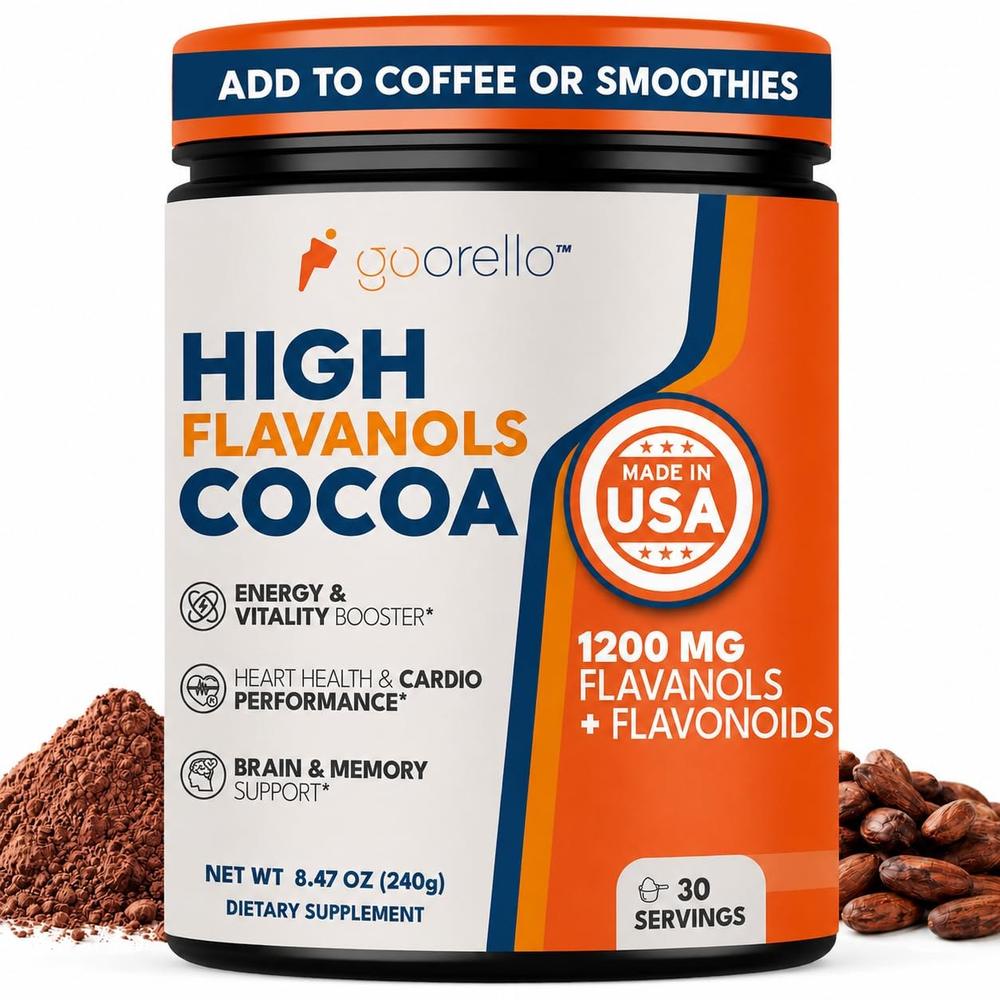
Goorello High Flavanols Cocoa Powder provides 600 mg of cocoa flavanols per serving from non-alkalized cocoa, with no added sugar or caffeine, to support healthy blood flow as part of a heart-healthy routine. It's designed to sit alongside the habits above and your doctor's advice, not replace them.
References
[1] World Health Organization. Hypertension fact sheet. who.int
[2] Appel LJ, et al. (1997). A clinical trial of the effects of dietary patterns on blood pressure. New England Journal of Medicine, 336(16), 1117–1124.
[3] Centers for Disease Control and Prevention. Sodium and your health. cdc.gov
[4] Neter JE, et al. (2003). Influence of weight reduction on blood pressure: a meta-analysis of randomized controlled trials. Hypertension, 42(5), 878–884.
[5] Cornelissen VA, Smart NA. (2013). Exercise training for blood pressure: a systematic review and meta-analysis. Journal of the American Heart Association, 2(1), e004473.
[6] Ponte Márquez PH, et al. (2019). Benefits of mindfulness meditation in reducing blood pressure and stress in patients with arterial hypertension. Journal of Human Hypertension, 33(3), 237–247.
[7] EFSA Panel on Dietetic Products, Nutrition and Allergies. (2012). Scientific Opinion on the substantiation of a health claim related to cocoa flavanols and maintenance of normal endothelium-dependent vasodilation. EFSA Journal, 10(7), 2809.
These statements have not been evaluated by the Food and Drug Administration. This product is not intended to diagnose, treat, cure, or prevent any disease. This article is for general education and is not medical advice.